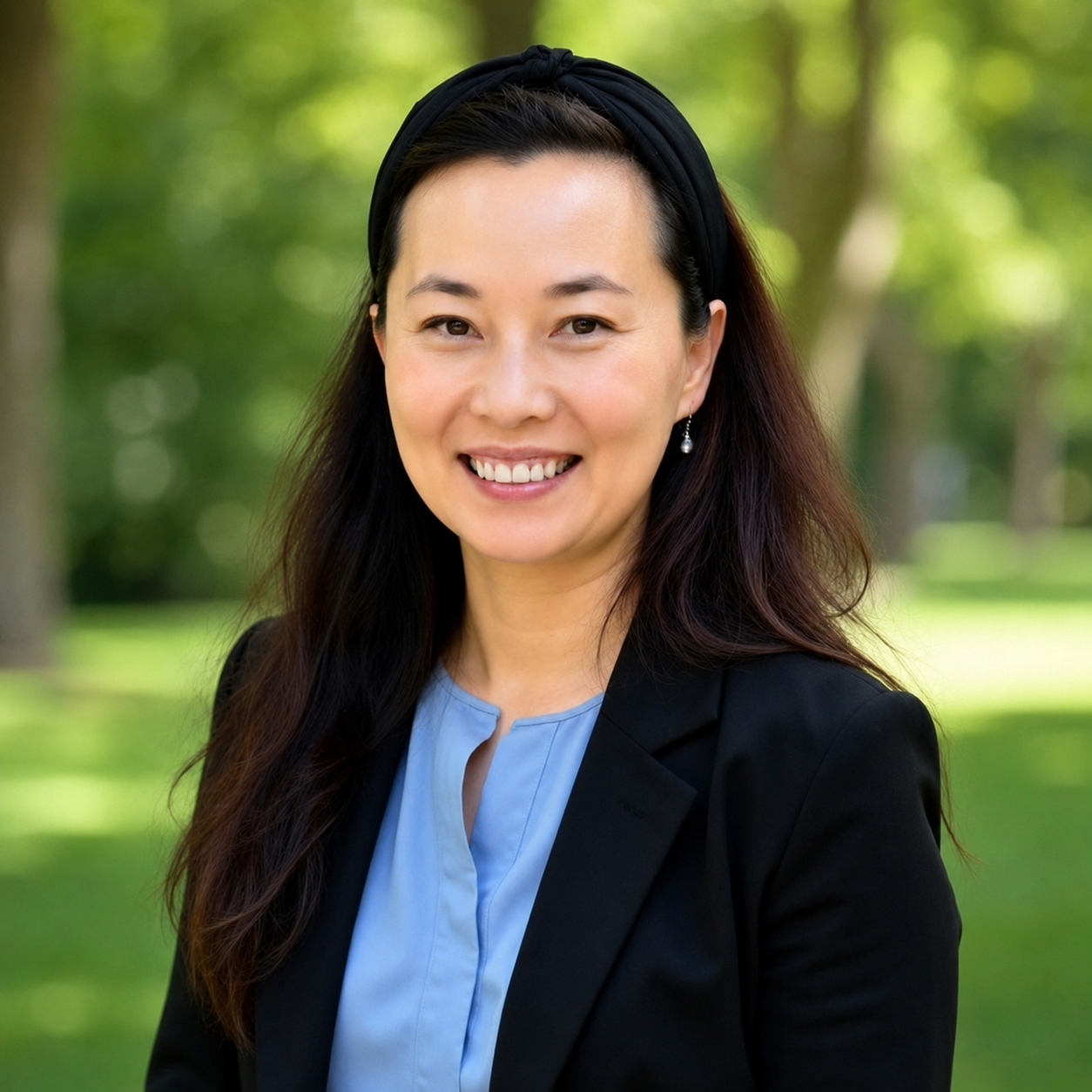
Aliya Kuerban
I created Clinical Reasoning With Data™ to help clinicians move beyond performing statistical procedures and toward something more important: understanding what evidence means.
As a professor with a background in nursing and advanced clinical practice, I have seen how easily statistics can become separated from the questions clinicians actually care about. This learning system was designed to bring those two worlds back together.
Statistics should help clinicians think more clearly—not make clinical questions feel more distant.
Too often, learners encounter statistics as a sequence of tests, formulas, assumptions, and software procedures. They may learn how to obtain an answer without ever becoming fully comfortable asking what that answer means for patients, practice, or healthcare decisions.
Clinical Reasoning With Data™ was developed around a different idea. Learners begin with a clinical situation. They notice what is happening. They ask questions. The data arrive gradually. Statistical methods enter only when they help answer a question that already matters.
Across seven connected clinical investigations, learners move from describing patterns to comparing outcomes, explaining differences, predicting risk, evaluating evidence for implementation, and ultimately using data to guide continuous improvement.
The goal is not simply to know statistics.
The goal is to think with data.
The clinical question comes before the statistical procedure. Learners first understand why the problem matters.
New analytical tools appear as the clinical questions become more complex, allowing confidence to develop one investigation at a time.
Statistical output is never the final destination. Learners must decide what the evidence means and what should happen next.
Confidence to ask better questions.
Judgment to interpret the evidence.
Courage to use it well.
My hope is that learners finish this journey seeing data differently: not as something separate from clinical practice, but as one more way to understand patients, evaluate care, improve systems, and lead thoughtful change.